
Evolving for sustainable Choral Excellence
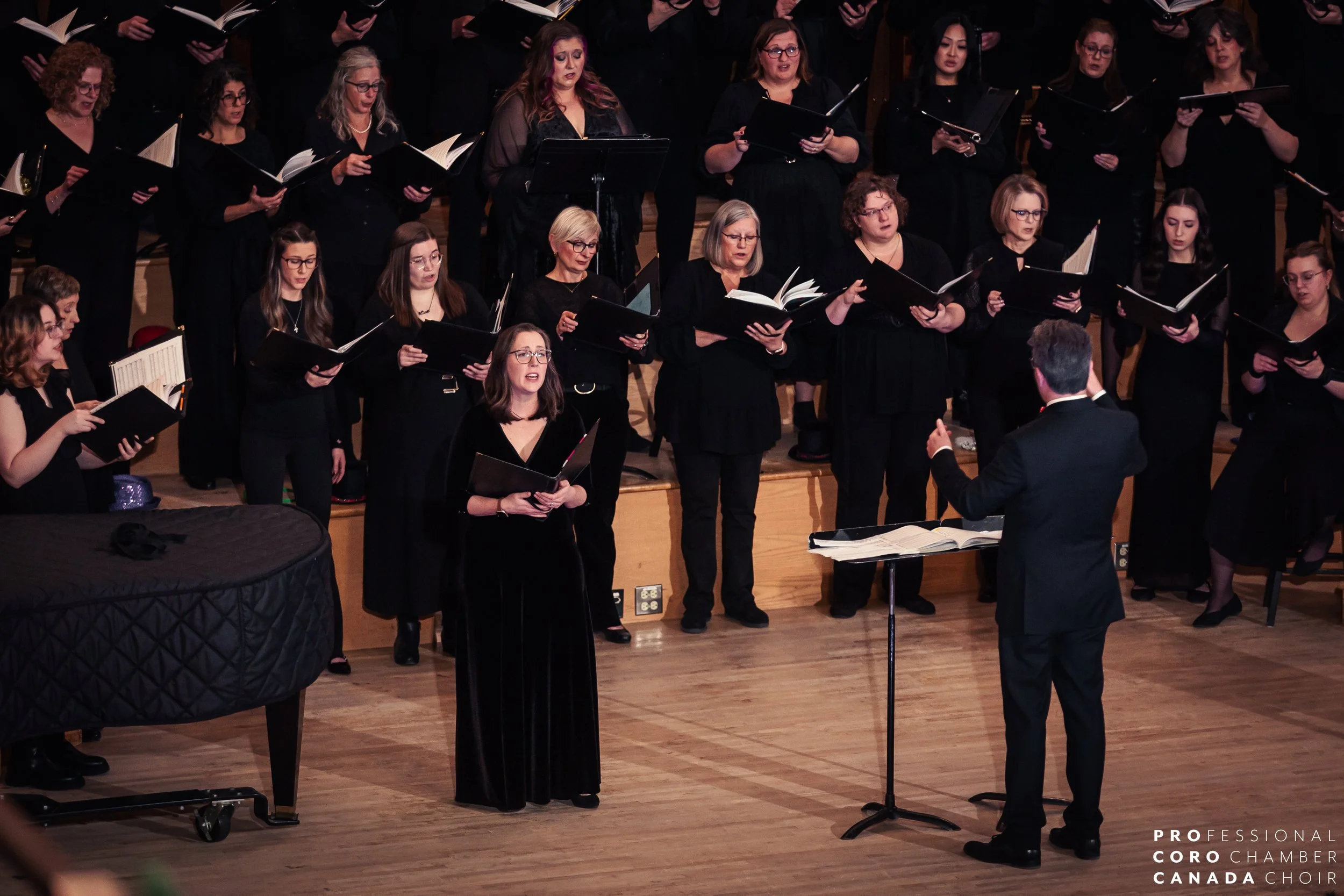
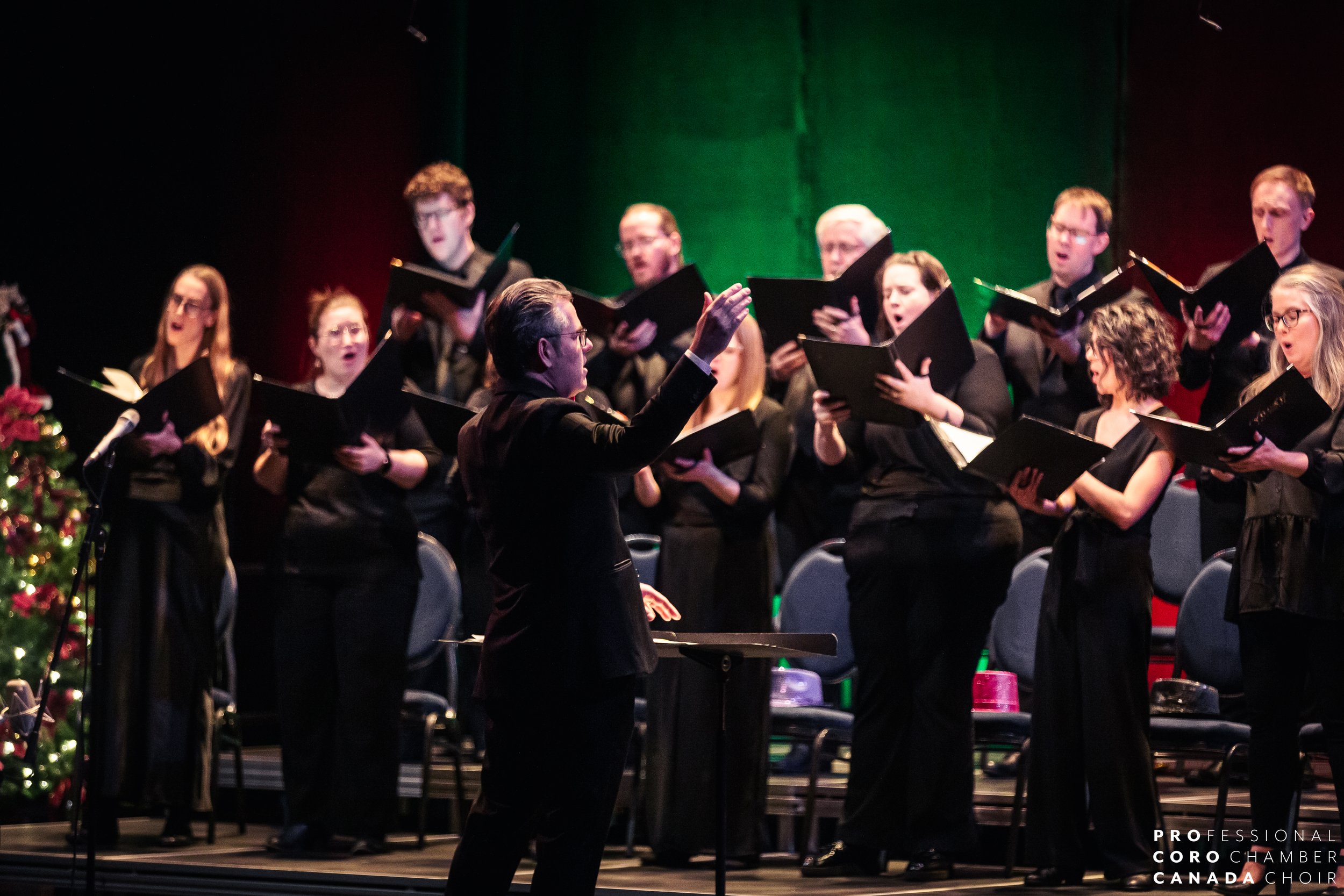
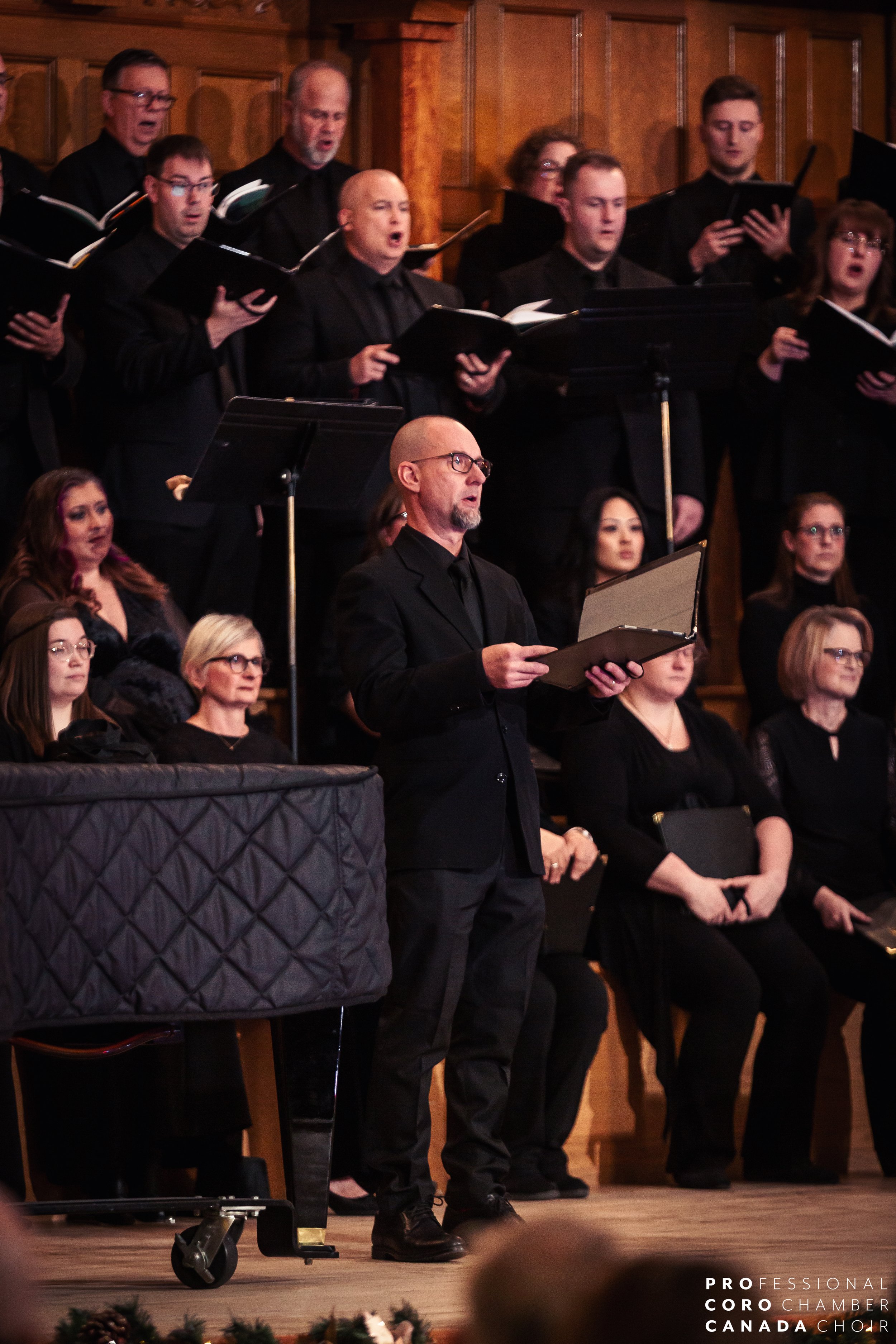
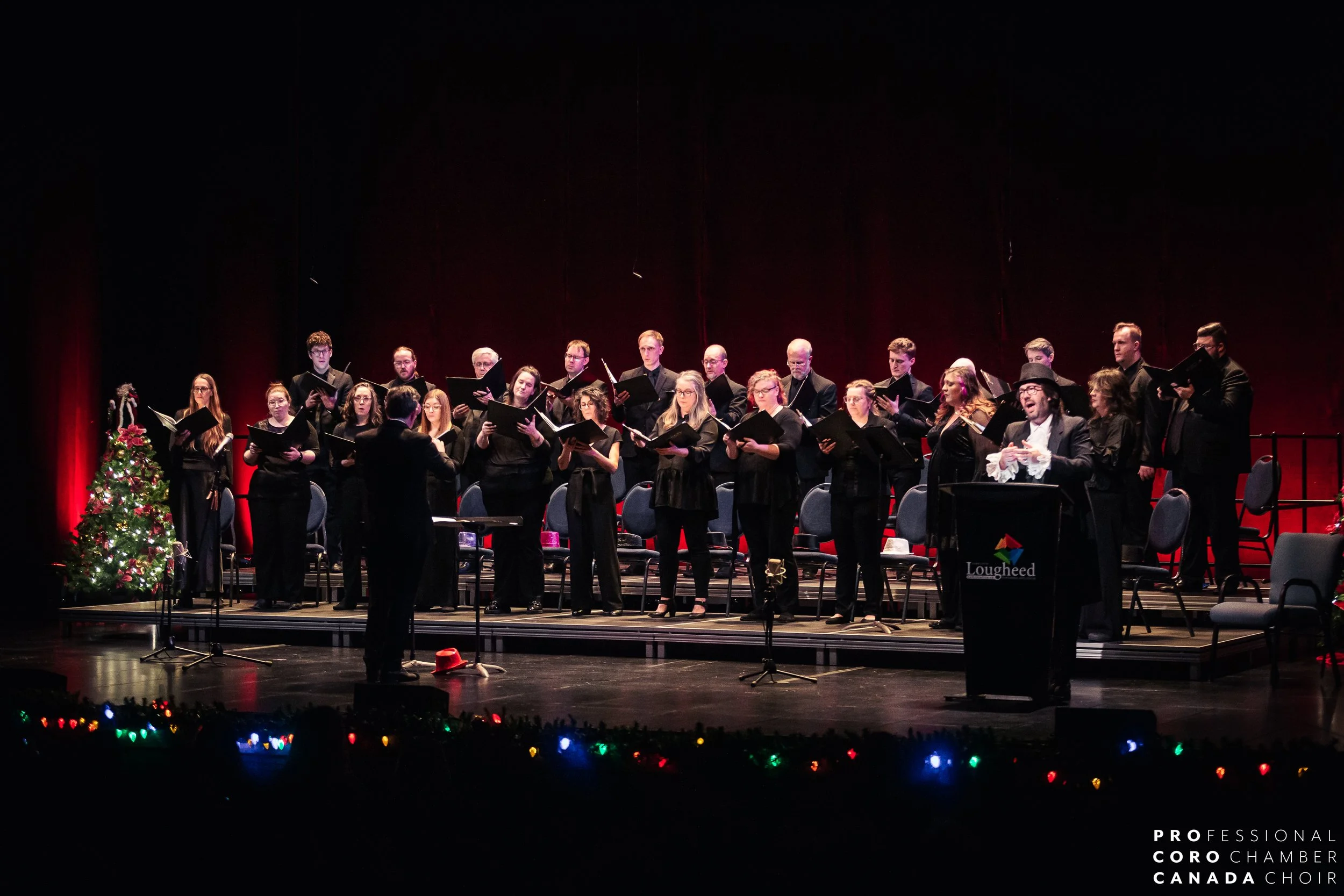
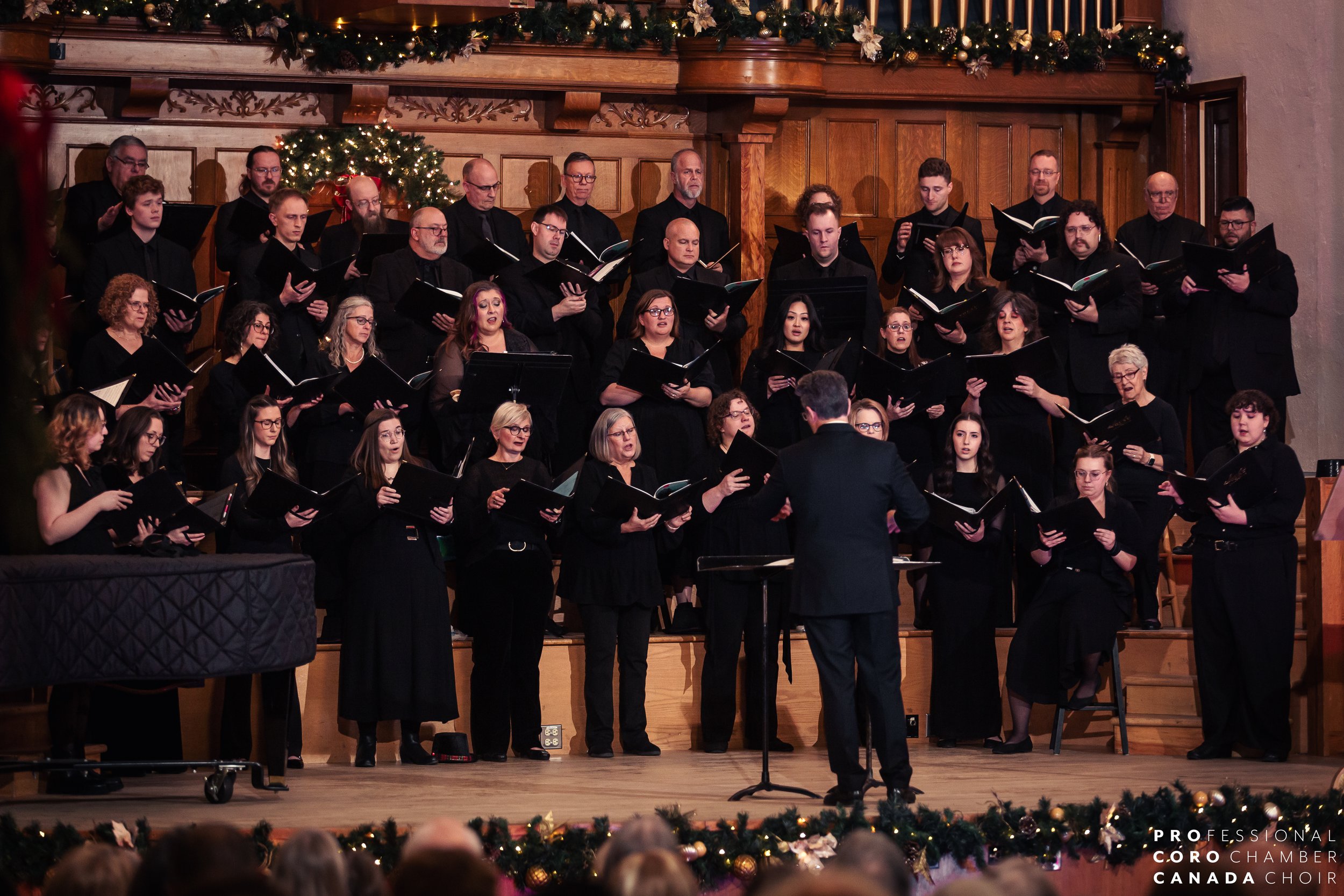
Pro Coro Canada: A Strategic Reset for Balanced Performance: On and Off Stage.
Pro Coro Canada (PCC) has long been recognized as a leader in innovative choral performance, a legacy highlighted by its leadership role in the Canadian Choral scene during the global pandemic, the creative partnerships with the Canadian League of Composers, and the 2020 Innovation Award for the Choral Arts program at the Banff Centre.
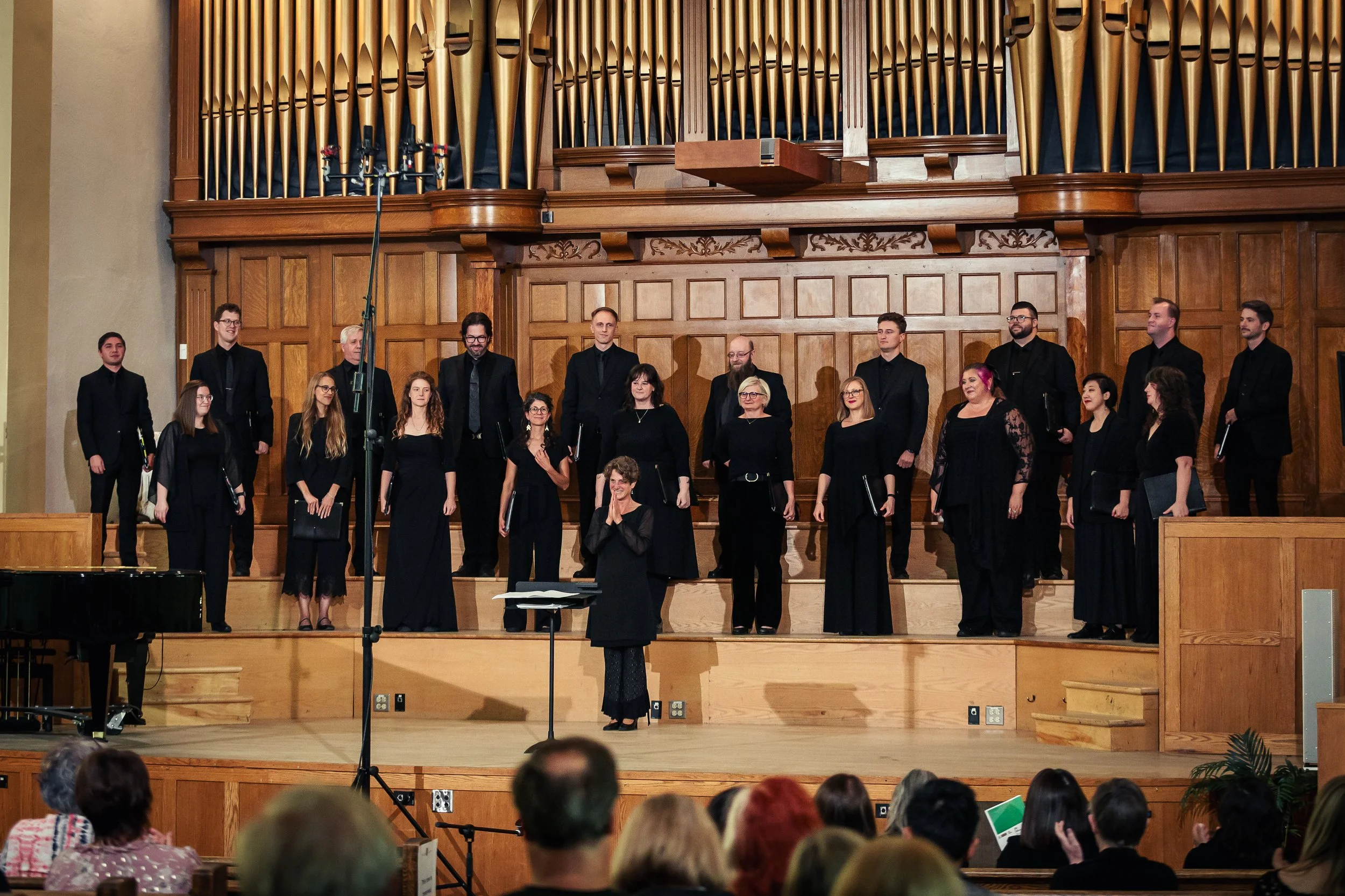
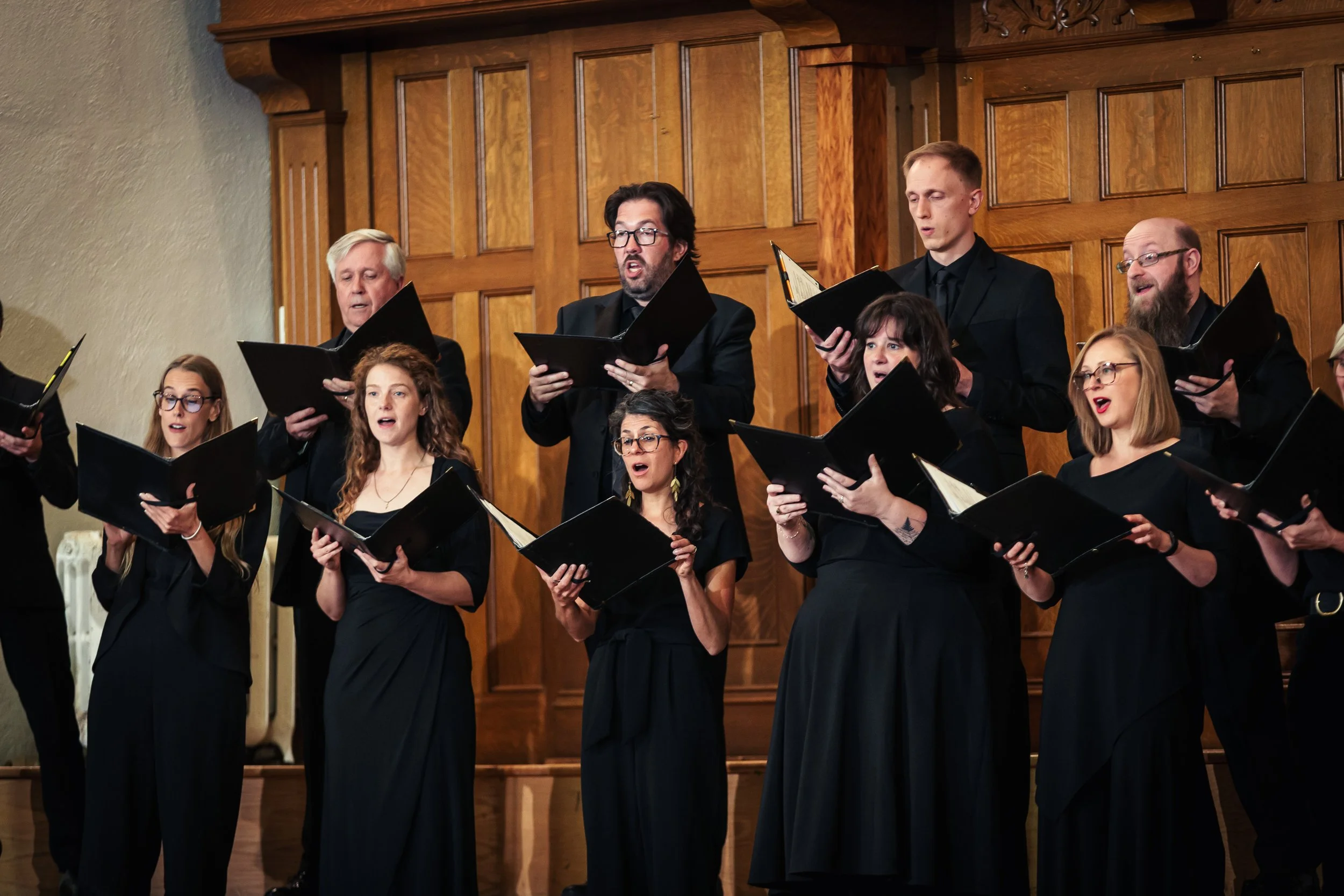
The vision for Pro Coro Canada is to establish a full-time professional chamber choir in Edmonton, with 20 to 24 singers, providing guaranteed annual salaries and benefits, possibly through an employee relationship with the Society. This choir will perform an ambitious concert season and engage with the community on a regular, weekly basis. The new operational model is the crucial first step to achieve this sustainable work environment.
The new operational model will commence in September 2026 with a core ensemble of 16 singers.
We continue to contribute to the evolution and broadening expression of choral music by employing professional singers, fostering Canadian talent, and engaging with diverse artistic partners.
Our professional chamber choir inspires hearts, minds and spirits in all who experience the art of a world-class orchestra of voices.
Since its inception, PCC operated successfully on a project-based model, rehearsing intensively over 10 to 12 days preceding each performance, typically during evenings and weekends. This model was highly effective and utilized throughout 1985 to 2015, to accommodate collaborations with out-of-town, fly-in conductors. The schedule of 5 or 6 season concerts also allowed the participation of professional singers with full-time daytime employment. However, when the current Artistic Director became a resident of Edmonton in 2015, resulting in the subsequent scaling up of operations and productions, plus a post-pandemic environment that sees many challenges and burn-out for the Culture and Arts sector, coupled with a new awareness of work-life balance by Arts Workers, PCC recognizes the necessity of a fundamental operational shift.
The core production cycle will be fundamentally restructured to create a scalable, flexible, and engaging environment.
The shift to daytime, weekday availability allows PCC to engage with new, valuable audience segments:
This allows for more flexible and artistically driven programming and an overall increase in performance quantity.
The transition presents operational and artistic shifts that have been proactively identified and addressed.
| Challenge | Strategy for Mitigation |
|---|---|
| Singer Availability | From the current roster of available professionals, a 16-part ensemble can already be created. Arts Workers appreciate the opportunity for daytime work. Singers with full-time daytime employment will no longer be regular members, but have an option to participate in some larger, traditional productions. We will actively market regular singing work to post-graduate schools to additionally recruit for young professional singers, with the expectation that over time, some may base themselves in Edmonton. |
| Performance Perception (16 VS 24 singers) | We acknowledge the difference in sound with 16 singers versus 24 singers. This will be addressed through thoughtful programming and by emphasizing that the reduction in size is a temporary means to achieve a sustainable model, maintaining a stable ensemble. |
| Artistic Programming | The core programming will shift away from complex 24-part repertoire to a rich selection of music composed for up to 16 parts, moving toward more traditional music initially. This is a strategic short-term adjustment that allows us to fulfill our mission while building a sustainable base, and a flexible ensemble. |
| Daytime Concerts Uptake | Establishing these events is a priority, building on strong foundations with SAGE, care homes, and high schools. We will secure funding for an educational outreach program and anticipate that daytime concerts will grow in popularity over time. |
| Administrative Scaling | We are evaluating which elements of the existing production model (livestreaming, print materials) can be maintained and will strategically expand our volunteer base. We introduce an Ambassador portfolio for choral enthusiasts who volunteer their time and knowledge in connecting with, firstly, the senior community. |
The New Model is a strategic response to several critical risks highlighted in the 2025 Risk Assessment.
| Risk Category | Example Risk | Relevance to New Model |
|---|---|---|
| Pressure on Funding Agencies | Public funding decreases | This is an immediate risk. The New Model is designed to create a more flexible organization that is less dependent on grants over time, and in a stronger position with funders through an employer-employee structure (possible by 2028). |
| Staff Retention | Singers moving or leaving the organization | The New Model mitigates this long-term risk by offering guaranteed, consistent professional work and a better work-life balance. |
| Audience Sales | Low sales due to external factors (economy) | This is an immediate and likely risk. The New Model addresses this by diversifying our audience base through daytime outreach and community engagement, reducing reliance on traditional ticket sales. |
The transition to the new model is a deliberate, multi-year process designed to ensure stability and incorporate continuous feedback.
Planning phase, consultation with professional choirs, change management specialists, and stakeholders and initial draft preparation.
Sharing initial plan and model with the Board and current choir members.
Individual meetings with singers, audience surveys, Board engagement, and season planning (schedule, programming, budget).
Budget review/approval, release of schedule and distribution of offers to the 16 core singers. Audience communications regarding changes.
Official announcement and release of the 2026-27 season.
Official commencement of the 45th Anniversary Season and the rollout of the new operational model.
The model is committed for three full seasons. Formal review cycles include audience feedback (Winter 2027), singer evaluations (Spring 2027), and Operations/Productions review (Summer 2027).